
Agriculture & Rural Energy
Solar + Battery for Farms: Moving From Energy Access to Productive Use
In agriculture, the value of energy is not measured by connection alone. It is measured by what the energy allows a farm or agro-processing operation to actually do — pump water, keep produce cold, run a mill, extend a working day.
Conversations about rural energy often stop at access: whether a farm, cluster or community has electricity at all. Access matters, but on its own it is an incomplete measure. A connection that only lights a few bulbs changes daily life modestly; a system sized and designed around productive activity can change the economics of an entire operation. For agriculture in particular, the more useful question is what the energy is for.
From Access to Productive Use
Energy access is a starting point, not a destination. The step that matters for a farm is the move from simply having power to using power productively — for irrigation, storage, processing and the other activities that determine income and resilience. This is the difference between an energy system that is present and an energy system that is working.
Framing energy around productive use changes how a system is designed. Instead of asking only how to deliver a connection, the question becomes what activities the energy should enable, how much power those activities require, and when they need it. The answers shape everything that follows.
Solar and Battery as a Practical Pairing
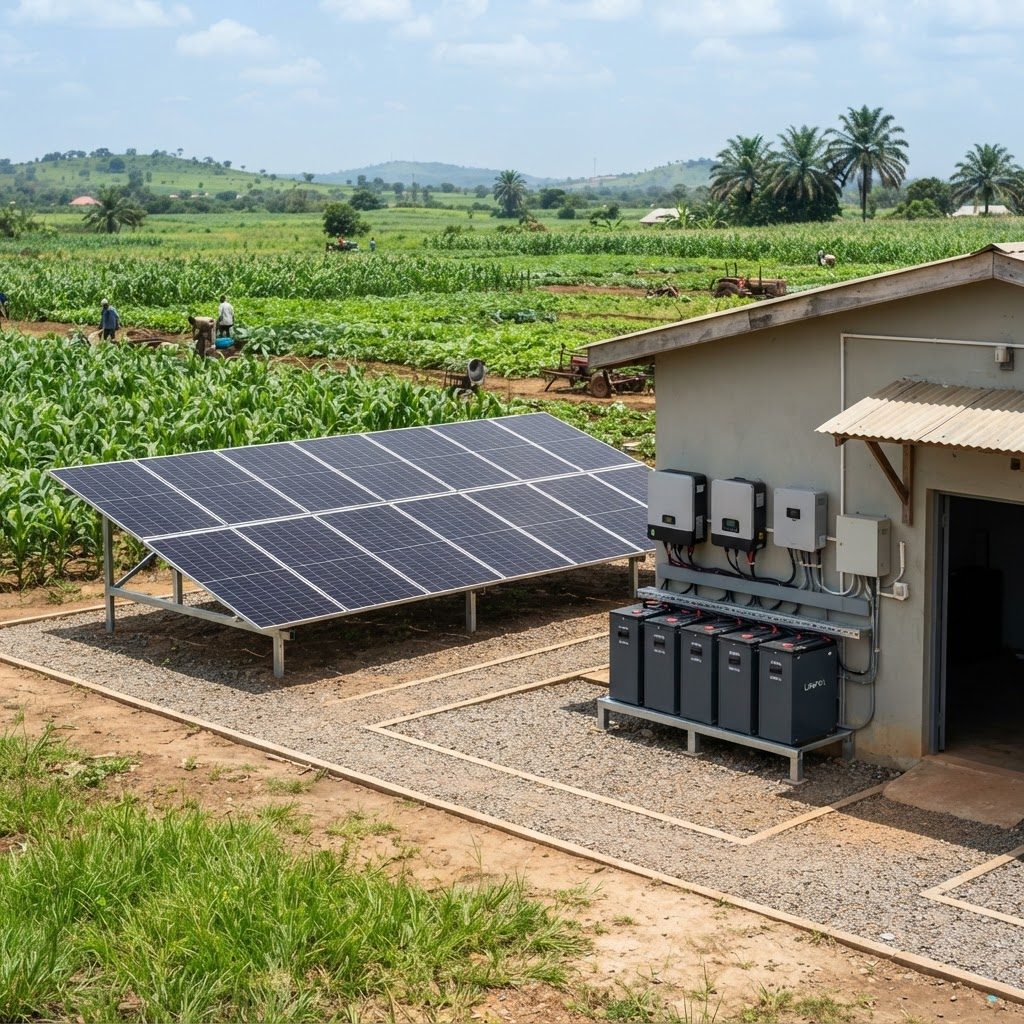
Solar generation suits many agricultural settings: sunlight is abundant, and the fuel is free once the system is installed. But solar follows the sun rather than the task. Irrigation, cold storage and processing rarely align neatly with peak daylight, and some of them — cold storage above all — cannot simply switch off when a cloud passes or the sun sets.
Battery storage is what turns intermittent generation into dependable supply. By storing energy generated during the day and releasing it when the work actually happens, a solar-plus-battery system can support activity across a longer and more predictable window. It is the pairing, not the panel alone, that makes productive use practical.
Irrigation, Cold Storage and Processing
Productive use in agriculture takes several forms, and each places different demands on an energy system. Water pumping and irrigation can extend growing seasons and reduce dependence on rainfall, but they require power matched to the pump and the pattern of use. Cold storage preserves produce and reduces spoilage, yet it needs continuity: a cold chain that breaks intermittently offers limited protection. Agro-processing — milling, drying, pressing and similar activities — adds value close to the farm, but often needs steadier and larger loads.
These activities are not interchangeable from an energy point of view. A system built well for daytime pumping may be poorly suited to continuous refrigeration. Designing for productive use means understanding which activities matter, how they behave through the day, and how a shared energy system can serve them without being over-built for any one of them.
“The real question is not simply whether electricity reaches the farm, but what productive activity that electricity enables.”
Designing Around the Real Requirement
The strongest agricultural energy projects begin with the operation, not the equipment. What does the farm or cluster actually do? Which activities are most valuable, and which are most sensitive to interruption? How does demand move across a day and a season? What already exists on site, and how should new generation and storage complement it? These questions shape a system that fits the work rather than a generic template applied to it.
This discipline also guards against two common failures: systems too small to support the productive activity they were meant to enable, and systems too large for the demand they serve, tying up scarce capital for little return. Matching the architecture to the real requirement is what keeps a project both useful and viable.
Clusters, Mini-Grids and Shared Infrastructure
Not every agricultural energy need is best met farm by farm. Where activity is concentrated — an agricultural cluster, a processing hub, a rural enterprise zone — shared infrastructure such as a mini-grid can serve several users at once and support larger productive loads than any single site could justify alone. Aggregating demand can make more capable systems practical.
Whether a project is best served by a stand-alone system, a shared mini-grid or a hybrid arrangement depends on the geography, the mix of activities and the way demand is distributed. These are project-specific judgements, made from the particular situation rather than from a single preferred model.
Sustainability, Responsibility and Regulation
Energy for agriculture sits within environmental, safety and regulatory frameworks, and within the wider goal of supporting rural livelihoods responsibly. Solar and storage can reduce reliance on liquid fuels and their associated cost and emissions, but they still involve land, materials, siting and end-of-life considerations that deserve honest attention. The specific licences, permits and approvals depend on the nature and scale of each project.
Responsible delivery means designing within these frameworks from the outset and being candid about what a system can and cannot do. Every farm, cluster and community is different, and sound conclusions come from project-specific technical, commercial, agricultural and regulatory assessment rather than from generalisation.
References & Official Sources
For authoritative information on Nigeria's agricultural policy, rural electrification and energy programmes, consult the official publications of the relevant public institutions. MEELK Energy Limited is an independent company and is not affiliated with these bodies; no figures or data in this article are drawn from them.
- Federal Ministry of Agriculture and Food Security
National agricultural policy, programmes and food-security coordination.
- Rural Electrification Agency (REA)
Off-grid, mini-grid and solar-hybrid programmes serving rural and agricultural communities.
- Federal Ministry of Power
National power-sector policy and programmes.
- Energy Commission of Nigeria (ECN)
National energy planning and policy coordination.