
Oil, Gas & Petroleum
Gas-to-Power and the Future of Distributed Generation in Nigeria
Gas remains one of the most practical routes to firm, dispatchable power. How it is integrated with distributed generation — alongside solar, storage and the grid — will shape how many industrial and commercial operations secure reliable energy.
Nigeria's energy conversation is often framed as a contest between fossil fuels and renewables. On the ground, most industrial and commercial operators face a more practical question: how do they secure power that is reliable, affordable and resilient enough to run a business. Gas has a natural place in that answer, not as an end in itself, but as a source of firm, dispatchable generation that can anchor a wider distributed-energy system.
Why Gas Still Matters for Firm Power
Solar and battery storage have transformed what a well-designed energy system can do, but they are shaped by the resource and the size of the storage behind them. Many industrial loads run continuously, draw heavily at particular times, or cannot tolerate interruption. For those loads, a firm, dispatchable source that can run on demand remains valuable — and gas-fired generation is one of the more practical ways to provide it.
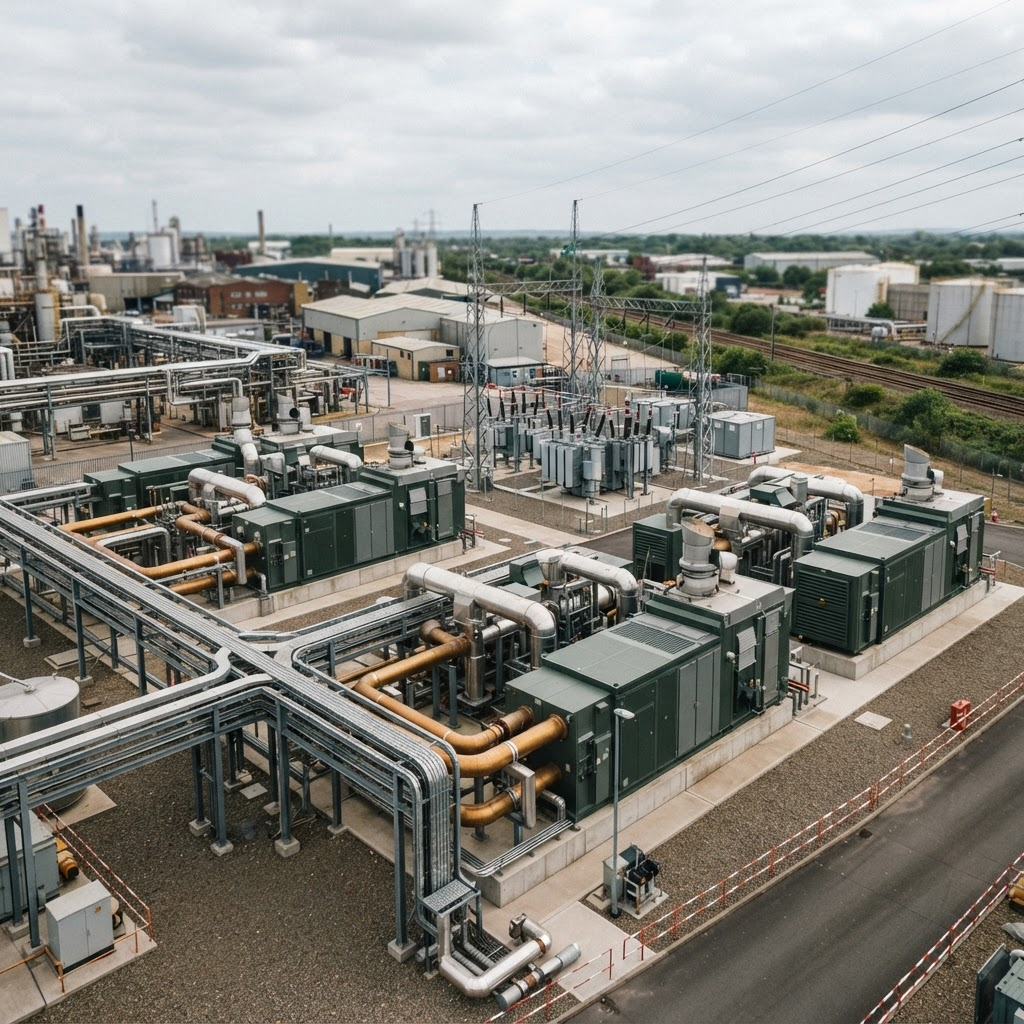
Gas-to-power simply means using natural gas to generate electricity, whether through reciprocating engines, turbines or packaged generation systems. What makes it relevant to distributed generation is that these systems can be sized and sited close to demand, rather than depending solely on distant central plants and long transmission networks.
Gas Within a Distributed-Generation Model
Distributed generation places capacity near the point of use. In that model, gas is rarely the whole system. It more often works as the firm layer beneath a mix that can include solar and battery storage, grid supply where it is available, and a control system that coordinates how each source is used. The result is an architecture that can prioritise critical loads and keep an operation running through interruptions.
This is where gas and renewables complement rather than compete. Solar reduces fuel consumption and running cost during the day; storage smooths short peaks and manages transitions; gas provides the firm capacity that covers periods when renewable output and stored energy are not enough. Designed well, the combination is more reliable and more cost-stable than any single source on its own.
“The question should be: What combination of energy resources gives this operation the reliability, cost structure and resilience it needs?”
Hybrid Systems and Industrial Reliability
For an industrial user, reliability is not an abstract virtue — it is the difference between meeting production targets and absorbing the cost of stoppages, damaged equipment and idle labour. A hybrid system built around firm gas capacity, renewables and storage lets an operator manage those risks deliberately, rather than reacting to whatever the grid or a single generator delivers on a given day.
The same architecture also creates room to manage cost. Blending sources allows an operation to reduce fuel use where renewables can carry the load, and to fall back on firm generation when needed, smoothing exposure to both tariff and fuel movements over the life of the asset. The objective is a stable, predictable total cost of reliable power, not the lowest price on any single input.
Regulation, Gas Supply and Responsible Delivery
Gas-to-power sits across two regulated worlds. Electricity generation, embedded and captive power, and independent power arrangements fall within the electricity framework overseen by the Nigerian Electricity Regulatory Commission. Gas itself is regulated across the petroleum value chain — upstream production under the Nigerian Upstream Petroleum Regulatory Commission, and midstream and downstream processing, transportation and distribution under the Nigerian Midstream and Downstream Petroleum Regulatory Authority.
In practice, this means the licences, permits and approvals for a gas-to-power project depend on its specific configuration — how power is generated and used, how gas is sourced and delivered, and the scale involved. Gas supply arrangements, in particular, are project-specific commercial and regulatory matters that have to be established for each case rather than assumed. Responsible delivery means designing within these frameworks from the outset and being clear about what has, and has not, yet been secured.
Where This Leaves Project Developers
Gas-to-power is not a universal answer, and it is not in tension with the energy transition when it is used to provide firm capacity within a cleaner, better-managed system. For many Nigerian operations, the most durable path is a considered mix — gas for firm power, renewables to reduce cost and emissions, storage to add flexibility, and distributed generation to place capacity where it is actually needed.
Building that mix well is a project-development discipline. It starts with real demand and site conditions, works through the technical and commercial options, and stays inside the applicable regulatory framework — rather than starting from a preferred technology and working backwards.
References & Official Sources
For authoritative information on Nigeria's energy-transition strategy, electricity regulation and petroleum-sector regulation, consult the official publications of the relevant public institutions. MEELK Energy Limited is an independent company and is not affiliated with these bodies; no figures or data in this article are drawn from them.
- Nigeria Energy Transition Plan
National strategy for the energy transition, including the role of gas as a transition fuel.
- Nigerian Electricity Regulatory Commission (NERC)
Regulation of the electricity supply industry, including embedded, captive and independent power.
- Nigerian Upstream Petroleum Regulatory Commission (NUPRC)
Regulation of upstream petroleum operations, including gas produced upstream.
- Nigerian Midstream and Downstream Petroleum Regulatory Authority (NMDPRA)
Regulation of midstream and downstream petroleum operations, including gas processing, transportation and distribution.